Radioactive Waste

Radioactive Waste
Radioactive Waste

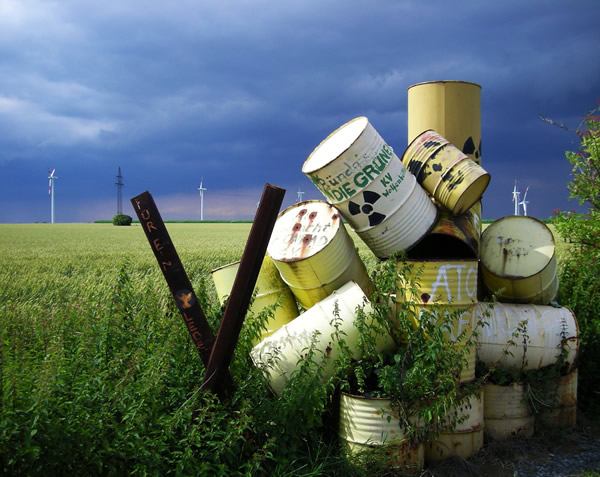
Radioactive waste (or nuclear waste) is a material deemed no longer useful that has been contaminated by or contains radionuclides. Radionuclides are unstable atoms of an element that decay, or disintegrate spontaneously, emitting energy in the form of radiation.

Radioactive waste has been created by humans as a by-product of various endeavors since the discovery of radioactivity in 1896 by Antoine Henri Becquerel.

Since World War II, radioactive waste has been created by military weapons production and testing; mining; electrical power generation; medical diagnosis and treatment; consumer product development, manufacturing, and treatment; biological and chemical research; and other industrial uses.


There are approximately five thousand natural and artificial radionuclides that have been identified, each with a different half-life. A half-life is a measure of time required for an amount of radioactive material to decrease by one-half of its initial amount. Half-life values for each known radionuclide are unique. The half-life of a radionuclide can vary from fractions of a second to millions of years.

Some examples of radionuclides with a range of different half-lives include sodium-26 (half-life of 1.07 seconds), hydrogen-3 (half-life of 12.3 years), carbon-14 (half-life of 5,730 years), and uranium-238 (half-life of 4.47 billion years). The decay process of a radionuclide is the mechanism by which it spontaneously releases its excess energy. Typical mechanisms for radioactive decay are alpha, beta, and gamma emission.

Alpha decay is a process that is usually associated with heavy atoms, such as uranium-238 and thorium-234, where excess energy is given off with the ejection of two neutrons and two protons from the nucleus. Beta decay involves the ejection of a beta particle, which is the same as an electron, from the nucleus of an excited atom. A common example of a beta-emitter found in radioactive waste is strontium-90.

Maritime shipment of high level radioactive waste. Cherbourg, France.

After an alpha or beta decay, the nucleus of an atom is often in an excited state and still has excess energy. Rather than releasing this energy by alpha or beta decay, energy is lost by gamma emission—a pulse of electromagnetic radiation from the nucleus of an atom.

Everything on Earth is exposed to radiation. However, exposure to radiation at levels greater than natural background radiation can be hazardous. Exposure to certain high levels of radiation, such as that from high-level radioactive waste, can even cause death.

Radiation exposure can also cause cancer, birth defects, and other abnormalities, depending on the time of exposure, amount of radiation, and the decay mechanism. High-level radioactive waste from nuclear reactors can be hazardous for thousands of years. Radioactive waste can be categorized by its source or point of origin.

Because of this, the governments of many nations have developed waste classification systems to regulate the management of radioactive waste within their borders. The proper treatment, storage, and disposal of radioactive waste are prescribed based on the waste classification system defined in a nation’s laws, rules, and regulations. The table outlines common categories of radioactive waste.

Radioactive Waste Description
Radioactive Waste Description

Radioactive waste can vary greatly in its physical and chemical form. It can be a solid, liquid, gas, or even something in between, such as sludge. Any given radioactive waste can be primarily water, soil, paper, plastic, metal, ash, glass, ceramic, or a mixture of many different physical forms. The chemical form of radioactive waste can vary as well.

Radioactive waste can contain radionuclides of very light elements, such as radioactive hydrogen (tritium), or of very heavy elements, such as uranium. Radioactive waste is classified as high, intermediate, or low level. Depending on the radionuclides contained in it, a waste can remain radioactive from seconds to minutes, or even for millions of years.

Radioactive Waste Management

Radioactive waste management includes the possession, transportation, handling, storage, and ultimate disposal of waste. The safe management of radioactive waste is necessary to protect public health. If handled improperly, potential exposures of humans to high-level radioactive waste can be dangerous, even deadly. Some radioactive wastes such as certain types of transuranic waste can cause biological effects in humans only if the radionuclides contained in the waste are directly inhaled or ingested.


Most low-level radioactive wastes can be handled by humans without any measurable biological effects. Nevertheless, good handling practices of all radioactive materials and waste should be the goal to provide optimum protection to humans and the environment.

There have been historic practices associated with the use of radioactive material where workers were unaware of potential risks. The radium watch dial painters of the 1920s illustrate the health effects that can be associated with improper handling practices. The painters experienced high occurrences of cancer of the larynx and tongue due to ingestion of radium.

The transportation of radioactive waste can occur via roadway, aircraft, ship/barge, and rail. The classification and physical size of radioactive waste dictate the method of transport, the packaging required, and the labeling necessary to allow for the shipment of a specific waste. There are international transportation requirements for radioactive waste, as well as more specific regulations in individual countries.

Radioactive Waste Disposal

Radioactive Waste Disposal

Various methods to manage and dispose of radioactive waste have been considered. Proposed management and disposal methods have included the following scenarios: shallow land burial; engineered disposal vaults; vertical shafts drilled into granite, salt, basalt, or volcanic rock; disposal cavities mined into specific rock formations such as salt; deeper-earth disposal into the submantle layer; above-ground isolation in engineered, concrete structures; recycling and reuse of waste material; radionuclide transmutation into nonradioactive material; ocean and seabed disposal; ice-sheet disposal; isolation disposal on a remote island; and even disposal in space.

Most of the civilian high-level radioactive waste throughout the world is currently being stored at nuclear power reactor sites. The spent nuclear fuel generated from the 103 operating civilian power reactors in the United States is currently being stored on-site at the point of generation.

In Europe, prior to on-site storage, spent fuel is first sent to either the Sellafield site in the United Kingdom or the La Hague site in France to be reprocessed in order to recover usable fuel. No reprocessing of commercial spent fuel is being conducted in the United States. In the United States, spent fuel and other high-level radioactive waste awaits the construction of a central, permanent repository.

It is currently stored in spent fuel pools or, in some cases, in dry casks. Spent fuel pools are water-filled, lead-lined chambers that are adjacent to reactors on civilian power reactor sites. Dry-cask storage has become necessary in some cases where the on-site spent fuel pools have reached capacity.

The Office of Civilian Radioactive Waste Management at the U.S. Department of Energy (DOE) is charged with developing this federal repository. Amid local opposition, Yucca Mountain, Nevada, is presently under study to evaluate its suitability as a central repository for all U.S. high-level radioactive waste.

The Yucca Mountain site has been officially designated by President George W. Bush and Congress for full-scale studies. There has been further emphasis placed on the security of spent fuel, and in general on nuclear reactor sites following the September 11, 2001, terrorist attacks.

Nuclear reactor sites that store spent fuel have been identified as possible terrorist targets and, therefore, have been subject to heightened security and debate over potential vulnerabilities. France, Germany, the United Kingdom, and Japan also have plans to develop centralized repositories for high-level radioactive waste at various times in the future.

Transuranic waste generated by the DOE has an operational final repository. The Waste Isolation Pilot Project located near Carlsbad, New Mexico, accepts transuranic waste and mixed transuranic waste (i.e., transuranic waste that also has a hazardous waste component) from federal facilities throughout the United States. This facility is comprised of disposal cavities mined into a salt formation some 2,150 feet underground.

The disposal method used in the 1960s and 1970s for low-level radioactive waste was shallow land burial in earthen trenches. The infiltration of water into these trenches resulted in the migration or movement of certain radionuclides into surrounding soil and groundwater.

To respond to such problems, engineered disposal units have been developed to replace shallow land burial, utilizing enhanced cover systems to reduce the potential for water infiltration. The trial-and-error nature of early radioactive waste disposal sites has rendered new facility development a slow and cautious process.

Historical Perspective

The first commercial site for the disposal of low-level radioactive waste was opened in Beatty, Nevada, in 1962. Within the next ten years, five more sites opened in the United States: in Washington, Illinois, South Carolina, New York, and Kentucky. Private companies operated these sites on land leased from state governments. Prior to 1979, the DOE routinely used commercial sites for the disposal of federal waste.

Migration problems at commercial disposal sites in the United States were first discovered in the late 1960s. Four of the six commercial low-level radioactive waste disposal sites in the United States closed. Three of the four sites that closed developed leaks due to erosion by surface water, subsidence on tops of trenches, or buried waste immersed in water.

Several of these locations became federal Superfund sites due to radionuclides migrating beyond the disposal trenches, complicated by the presence of hazardous waste within the same facilities.

The historical problems experienced with commercial radioactive waste disposal in the United States resulted in the development of new regulatory requirements for site selection, construction parameters, operating practices, and waste-acceptance criteria at future disposal sites. A new U.S. disposal regulation, Title 10, Code of Federal Regulations, Part 61, “Licensing Requirements for Land Disposal of Radioactive Wastes” was introduced in 1982.

This regulation outlines the requirements necessary to ensure public health, safety, and the long-term protection of the environment. Since the development of this new regulation in the United States, only one site, in Clive, Utah, has been licensed and opened for disposal of low-level radioactive waste.

Radon

Radon
Radon

Radon is an odorless, colorless, radioactive, though chemically unreactive gas. It has an atomic number of eighty-six, which corresponds to the number of protons found in the nucleus of any isotope of radon.

There are more than thirty known isotopes of radon, and each one emits some combination of alpha, beta, and gamma radiation when undergoing radioactive transformation, commonly referred to as “decay.”

Radon gas is ubiquitous in the natural environment. This is because the precursors to radon, such as the aforementioned radium isotopes, and others such as radium, thorium, and uranium isotopes, are present in some rock formations. Radon is also found in the man-made environment because many of the materials, consumer products, and foodstuffs of everyday life come from the naturally radioactive environment.


Radon is one of the few examples in nature of a gaseous element that results from the decay of a solid element and then decays into another solid element. This increases its potentially harmful effect in humans. For example, radon-222, the most common isotope of radon, is a product of the alpha decay of radium-226 atoms, found in rocks. Radon-222 atoms subsequently produce polonium-218 in a similar alpha-decay process, and it is this solid substance that can lodge in human tissue.

Solid-state radionuclides remain where created by decay processes unless they are redistributed by dissolving in groundwater or by becoming airborne. Given the chemically inert nature of radon, there are no known compounds that include this element. Thus isotopes of radon may diffuse away from their place of origin and usually end up dissolved in ground water or mixed with air above the soil and rocks that bear their solid precursors.


People’s exposure to radon primarily occurs when radon seeps out of air spaces above soil or rocks and into surrounding indoor or outdoor air, such as the basements of houses built over radium-bearing rocks.

It is not exposure to radon gas that actually may lead to harm, but exposure to the decay products of radon, specifically the ones with short half-lives that emit alpha radiation. Radon-222 offspring, like polonium-218 and polonium-214, become attached to dust particles that may be breathed in by people exposed to the gas and become lodged in the respiratory tract.

Decay of the radon progeny while in the lungs is the means by which the radiation dose is delivered to the lungs. This dose, which is the energy of alpha particles absorbed by cells that line the lungs, is what gives rise to the potential for lung cancer associated with exposure to radon.

Radon has been labeled by the Environmental Protection Agency as the second-leading cause of lung cancer in humans (after tobacco smoke), based on mathematical risk estimates derived from many published studies of exposure of subsurface uranium miners to highly elevated levels of the gas, primarily radon-222.

Many radiation health scientists have challenged such findings because of the vast difference in exposure levels between homes and buildings on the one hand, and subsurface mines on the other. However, a variety of action levels and exposure limits for radon gas exposure have been recommended or set into law for the protection of the public.

The Surgeon General and the EPA recommend that radon levels of four picocuries or more inside homes be reduced. The EPA states that radon levels less than four picocuries still pose a risk, especially for smokers.

Methods to both detect and mitigate indoor radon exposure have been devised as well. Detection and measurement methods usually make use of a device to collect radon gas atoms or the offspring particles.

The simplest real-time method would be a “grab sample,” in which air is drawn into an evacuated flask that is then taken back to a laboratory for analysis. The most popular short-term measurement device is the activated charcoal canister, a small container of steam-treated charcoal that is opened and left at the sampling location for a prescribed time.

Radon is adsorbed by the charcoal, and the decay products of the radon are analyzed after the canister has been resealed and retrieved. The simplest mitigation methods include sealing cracks and penetrations through foundations, as well as diverting the radon away from the slab or out of the ground, with vacuum or ventilation systems.

Recycling

Recycling
Recycling

Recycling is any process that involves the recovery and reuse of materials that were once considered trash. Recycling can be as simple as reusing something—such as a coat or computer—by passing it on for someone else to use. Or, it can be as involved as reprocessing materials in metals, plastics, paper, or glass to make new products.

An Old Idea Is Rediscovered

There is nothing new about recycling. People have found ways to reuse pottery, gold, silver, and bronze for thousands of years. Old swords were melted and reshaped to use as plows. Gold and silver jewelry were melted down and reshaped into other forms.

As recently as one hundred years ago, traveling peddlers in the United States and Europe collected rags, bones, and scrap metal waste from household garbage and sold them to manufacturers to make into new products.


During the early twentieth century, Americans relied less and less on recycling. By the 1950s the United States was labeled a “throw-away economy” because Americans were consuming increasing amounts of goods that ended up in garbage landfills.

Recycling was revived in many Western countries back in the 1960s and 1970s as the public became interested in conservation and looked for ways to reduce damage to the environment. In the United States, the first Earth Day in 1970 is often viewed as the official beginning of the modern recycling movement. On that day, hundreds of new recycling centers opened across the country.

The recycling movement caught on in many other Western countries during the next thirty years. Today, Germany recycles 30 percent of all of its trash. Japan recycles over 50 percent of its trash, half of all wastepaper and glass bottles, and more than 60 percent of its drink and food cans.

At the start of the twenty-first century, the United States recycling efforts are behind many European nations. Americans generate twice the amount of trash as Germans, but recycle less. According to the Environmental Protection Agency, the United States recycled 28 percent of its waste in 2002.

States vary widely in their recycling programs. Minnesota is the nation’s leader in recycling with a rate of recycling 45 percent of all domestic waste. Montana and Wyoming are at the bottom of the list, recycling less than 5 percent.

Why Recycle?

Recycling is one of the easiest steps anyone can take to reduce the impact of humans on the environment. On average, each American produces approximately 3.5 pounds of garbage per day. That is 1,500 pounds per person each year—or 90,000 pounds in a lifetime. Without recycling, all this trash ends up in landfills.

In the 1970s many people believed that recycling’s greatest benefit was the reduction of the number of landfills because this would reduce the pollution associated with landfills and preserve the land. More recently, researchers have found multiple benefits to recycling.
  1. Recycling saves natural resources. Recycling reduces the demand for new materials from the environment. For example, by recycling paper, fewer trees are needed to produce new paper.
  2. Recycling saves habitats such as rain forests. By reducing the demand for new materials (such as metals that must be mined and refined) from the environment, more land and habitats can be preserved and/or conserved.
  3. Recycling saves energy and reduces emissions. In most cases, it takes less energy to make new products from recycled materials than from virgin raw materials. For example, it takes 95 percent less energy to produce aluminum products from recycled aluminum than from the raw materials of bauxite ore. In general, recycling of materials also produces less pollution than processing raw materials.
  4. Recycling can be economical. Recycling is often less expensive than the combined cost of processing new materials and managing waste disposal.
  5. Recycling reduces the need for new landfills and incinerators. Landfills and incinerators can emit hazards to the environment. When landfills leak, hazardous solvents can contaminate underlying groundwater—water that may be used for agriculture or as drinking water. Landfills and incinerators also emit pollution into the air.
  6. Recycling reduces the improper disposal of trash, such as littering.

Internal and External Recycling

Most people associate recycling with items such as newspapers, magazines, plastics, aluminum, and glass. The recovery, reprocessing, and reuse of materials from used items is called external recycling and requires public participation.

A second type of recycling, internal recycling, is the reuse of waste materials from manufacturing and does not involve the general public. For example, the manufacture/production of copper items results in wasted copper pieces; with internal recycling, these pieces are melted down and recast. Although internal recovery is possible in many industries, it is most common in the metal industry.

Because industrial waste accounts for 98 percent of all waste in the United States, many critics of recycling advocate that more attention should be paid to internal recycling than external recycling.

How External Recycling Works

External recycling involves three basic steps:
  1. Recovery.
    Recovery is the collection of used items that can be recycled. Many cities have drop-off centers or special curbside pickup programs to collect recyclables. Recovery may include sorting and separation of collected materials.
  2. Reprocessing.
    Reprocessing is the conversion of used items into reusable products. For example, glass is melted down and molded into new bottles or paper is reprocessed into new paper. There are three kinds of reprocessing: primary, secondary, and tertiary:
    • Primary recycling is the reprocessing of materials into the same type of product, such the recycling of used glass bottles into new glass bottles.
    • Secondary recycling is the reprocessing of materials into different but similar products, such as processing corrugated cardboard boxes into cereal boxes.
    • Tertiary recycling is the reprocessing of a material into a product that cannot be recycled again—for example, when mixed office paper is reprocessed into bathroom tissue.
  3. Marketing and sale of new items.
    One of the most challenging parts of recycling is creating markets for recycled items. Recycling programs depend on their ability to advertise and sell recycled items at competitive prices. Recycling does not accomplish its goals if recycled items are not used.

What Things Are Recycled?

Recycle bin
Recycle bin

There are four groups of materials that are commonly recycled today.
  1. Standard recyclables. The most commonly recycled materials are aluminum, glass, paper products, steel, and plastics.
  2. Hazardous wastes. Hazardous wastes include items such as antifreeze, motor oil, paint, and batteries. Many cities have special centers to recycle hazardous wastes.
  3. Newer products. Some recycling centers have systems to reprocess newer products such as compact and floppy disks.
  4. Used automobiles and parts.

Aluminum
Aluminum cans are the most widely recycled metal. In 1999 roughly two-thirds of all aluminum cans produced in the United States were recycled. However, not all forms of aluminum are recycled. For example, aluminum foil can be recycled, but not all recycling centers are set up to process it.

Paper
Paper recycling is one of this country’s most successful recycling programs. By weight, more paper is recycled each year than all other materials combined. The success of this program is in part due to the successful marketing and sale of recycled paper. Recycled paper is widely used today. Unfortunately, paper can only be recycled a limited number of times, because the paper fibers become too short to continue reprocessing after awhile.

Newspaper
Every part of a newspaper can be recycled—including the newspaper and inserts. Newspaper recycling has been profitable for decades.

Steel
Steel cans can be recycled many times. Recycled steel is used for many products such as tin cans.

Plastics
Plastics are not biodegradable, so the best choice is to recycle them. But plastics are a challenge for recycling centers. There are so many different kinds of plastics that they are difficult for recycling centers to reprocess; in fact, many plastics cannot be recycled. Those plastics that can be recycled can only be recycled a few times. Today, most plastic containers are marked on the bottom with a number in a triangle.

Each number indicates a different kind of plastic. This information allows recycling center staff to identify plastic containers that can or cannot be recycled. Containers marked one or two are the most commonly accepted plastics for recycling.

Hazardous wastes
Hazardous wastes include toxic materials such as paints, solvents, motor oil, antifreeze, herbicides, and batteries. If these materials end up in landfills, the risk exists that they may leak into underlying groundwater which people use for drinking. If incinerated, these materials end up in the air. Many recycling centers have special programs for handling hazardous wastes.

Batteries
Batteries contain many toxic ingredients, such as lead and cadmium, which can cause serious environmental damage if they are buried in landfills. Many recycling centers direct customers to special dealers who accept used batteries.


Computers
Used computers are a challenge for recycling, because they need to be completely disassembled. Recently, a number of companies have started exploring ways to do this efficiently and cost effectively. Recycling of computers is becoming increasingly important as the number of used computers continues to grow. One computer manufacturer, Dell, is now offering to take back old computers for reuse or recycling.

Automobile Recycling
For years, the economic incentives of recycling parts from cars, trucks and other motor vehicles has made automobile recycling a big business. In the United States, each year, more than eleven million vehicles are sent to the junkyard because they have been damaged in accidents or have reached the end of their life.

About three-quarters of the scrapped vehicles are recycled or their parts are resold. Every part from the doors and windows to engines and transmissions are sold; other recyclable metal parts are magnetically separated from other materials. The rest are shredded and buried in landfills.

In the future, a smaller percentage of automobile parts will be recyclable as cars are built with more nonmetal, nonrecyclable materials, unless the automobile makers give serious attention to designing new cars that can be recycled. New cars are being built with more and more high-tech gear and hundreds of different materials that cannot be recovered.

Countries in the European Union have been exploring ways to encourage automobile manufacturers to take greater responsibility for the recycling of “end of life” automobiles. Several countries have already implemented “end of product responsibility” programs. For example, in the Netherlands, car manufacturers are liable to pay a recycling fee when they market a vehicle. The fee is then used to cover possible recycling costs.

Composting - Recycling Organic Materials

Composting is a method of recycling organic materials, such as certain food waste and yard clippings, directly into the soil. Although there are many ways to make composts, the basic idea is to mix yard clippings and food waste into a pile with soil and let it decompose; worms, insects, and other organisms help break it down. Once the material in a compost has broken down, the degraded material can be tilled into the soil and applied as nutrient-rich mulch or material for plants.

Composting offers an opportunity to provide a rich source of nutrients for gardens and to reduce the amount of waste taking up space in landfills. Food and yard wastes currently make up about 30 percent of all wastes going into landfills. The airtight design of landfills slows down the decomposition of organic materials because they need oxygen to decompose. One community that has taken composting seriously is Halifax, Nova Scotia.

Roughly 30 to 50 percent of their waste is organic matter. In 1997 the Nova Scotia Department of Environment passed a law banning the disposal of food, leaf and yard waste from landfills. Through heightened use of composting and other programs, between 1989 and 2000, Nova Scotia’s per capita waste production dropped from 720 kg to 356 kg.

Composting 101
Composting 101

Renewable Energy

Renewable Energy
Renewable Energy

Renewable energy is energy that is regenerative or, for all practical purposes, virtually inexhaustible. It includes solar energy, wind energy, hydropower, biomass (derived from plants), geothermal energy (heat from the earth), and ocean energy. Renewable energy resources can supply energy for heating and cooling buildings, electricity generation, heat for industrial processes, and fuels for transportation.

The increased use of renewable energy could reduce the burning of fossil fuels (coal, petroleum, and natural gas), eliminating associated air-pollution and carbon dioxide emissions, and contributing to national energy independence and economic and political security.

Historical and Current Use

Before the 1900s, the world as a whole used wood (including wood converted to charcoal) for heat in homes and industry, vegetation for feeding draft animals, water mills for grinding grain and milling lumber, and wind for marine transportation and grain milling and water pumping.


By the 1920s, however, coal and petroleum had largely replaced these energy sources in industrialized countries, although wood for home heating and hydroelectric power generation remained in wide use. At the end of the twentieth century, nearly 90 percent of commercial energy supply was from fossil fuels.

Renewable energy, however, makes important contributions to world energy supplies. Hydroelectric power is a major source of electrical energy in many countries, including Brazil, Canada, China, Egypt, Norway, and Russia. In developing countries many people do not have access to or cannot afford electricity or petroleum fuels and use biomass for their primary energy needs.

For example, most rural people in Africa use wood, scrub, grass, and even animal dung for cooking fuel. Small-scale renewable energy technologies are often the only practical means of supplying electricity in rural areas of these countries.

Major Types of Renewable Energy Sources

Biomass
Biomass includes wood, agricultural crops and residues, municipal refuse, wood and paper products, manufacturing process waste, and human and livestock manure. It can be used to heat homes and buildings, produce electricity, and as a source of vehicle fuel. Wood and paper manufacturers and sugar mills use biomass residues for process heat and electricity production. There are power plants that burn wood, agricultural residues, and household trash to produce electricity.

Biogas (composed of methane, carbon dioxide, and other gases) produced by decomposing biomass in anaerobic conditions is captured from landfills, municipal sewage treatment plants, and livestock waste management operations. This gas can be used for heat or to generate electricity.

Ethanol is used as a transportation fuel in the United States, Brazil, and a few other countries. Nearly all the fuel ethanol in the United States is made from corn, although it can also be produced from other sources, including wastepaper. There is a small but growing consumption of “biodiesel” made from grain oils and animal fats.

Geothermal systems
Geothermal energy (heat from the earth) created deep beneath the earth’s surface is tapped to produce electricity in twenty-two countries, some of which include the United States, Iceland, Italy, Kenya, and the Philippines. Geothermal hot springs can also heat buildings, greenhouses, fish farms, and bathing pools.

Hydropower
Hydropower, produced from flowing water passing through hydroelectric turbines, is the leading renewable energy source, contributing to approximately 9 percent of the electricity generated in the United States.

Most hydropower is produced at large dams, although there are many small systems operating around the world, such as the small hydropower plant in Namche Bazar, Nepal, which provides power for the tourist and market town near Mt. Everest. The production of hydroelectricity from year to year varies with precipitation.

Ocean energy
The world’s oceans are a vast and practically untapped source of energy. There are a few operating wave and tidal power plants around the world, and several experimental ocean thermal energy conversion (OTEC) plants have also been built. A small wave power plant in Norway captures water from waves in a dam and lets the water out through a turbine.

A 240-megawatt tidal power facility on the Rance River in France produces electricity as tidal flows move back and forth through turbines located at the mouth of the river. In Hawaii, a small OTEC plan was built which uses the temperature of warm surface water to evaporate cold seawater in a vacuum to produce steam that turns a turbine and generator.

Solar energy systems
The simplest uses of solar energy are for drying crops, and heating buildings and water. Solar-heated homes and solar water heaters can be found in nearly every country around the world. Crops can be simply laid in the sun to dry, or more sophisticated collectors can be used to heat air to dry food stored on drying racks.

Solar water heaters use collectors to heat water that is stored in a tank for later use. Homes can be heated by using a masonry floor to absorb sunshine coming through windows, or by using solar collectors to heat a large tank of water than can be distributed for heating at night.

Concentrated sunlight can be used to produce high-temperature heat and electricity. Nine concentrating solar parabolic trough power plants, with a combined generation capacity of 354 megawatts, are located in the Mojave Desert in California. (A megawatt is 1 million watts, or 1,000 kilowatts.)

The U.S. Department of Energy built and tested a ten-megawatt solar thermal central receiver power plant near Barstow, California, which operated successfully for about seven years. Another type of concentrating solar thermal power system is a parabolic dish. Systems with a capacity of up to twenty-five kilowatts have been developed.

Photovoltaic (PV) systems are based on solar electric cells, which convert sunlight directly to electricity. They can be used to power hand calculators or in large systems on buildings. Many PV systems are installed in remote areas where power lines are expensive or unfeasible, although the number of systems connected to electricity transmission systems is increasing, and range in size from 1 to several kilowatts on houses, to systems over one hundred kilowatts on large buildings. PV systems are very suitable for use in developing countries where people have no electricity from electric power lines.

Wind energy systems
Water-pumping and grain-milling windmills have evolved into electric power turbines. There are now tens of thousands of wind turbines operating around the world. They range in size from tiny turbines on the back of sailboats to very large units that can produce as much as 2 to 3 megawatts of electricity, with 100-foot (30-meter) blades. They can be installed on land and in shallow water in coastal areas.

Renewable energy has many advantages that will help to maintain and expand its place in world energy supply:
  • Renewable energy resources are enormous—hundreds of times beyond the needs of world energy consumption in 2000.
  • Advances in technologies are reducing manufacturing costs and increasing system efficiencies, thereby reducing the cost of energy from renewable resources.
  • Negative environmental and health impacts of renewable energy use are much fewer than those of fossil fuels and nuclear power.
  • Many renewable energy technologies can produce energy at the point of use, allowing homeowners, businesses, and industry to produce their own power.
  • There is strong support for renewable energy from people around the world.
  • Many governments have programs that support renewable energy use to limit the emission of greenhouse gases and thereby reduce the threat of global warming.

As fossil fuels such as oil and natural gas become scarce, they will become more expensive. Some experts believe that demand for oil will exceed production capability within the next twenty years.

Using energy conservatively and efficiently, no matter how it is produced or where it comes from, is the most economical way to consume energy. Simply turning off lights and computers when they are not in use can save an individual household or business money and reduce the environmental impact associated with producing electricity.

Scrubbers

Scrubbers
Scrubbers

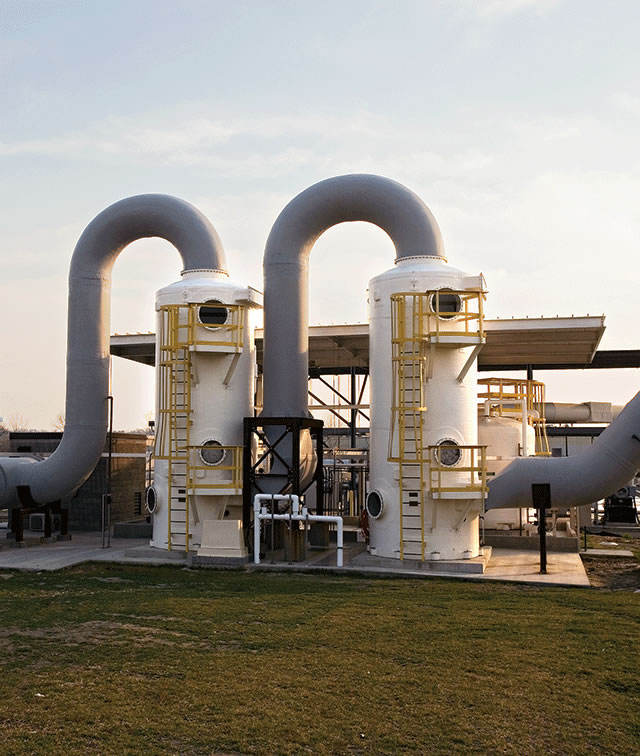
Scrubbers are air-pollution-control devices that remove harmful gases and particulates from the smokestacks of incinerators, chemical manufacturing facilities, and electric power plants before they enter the atmosphere. There are different types of scrubbers, including wet and dry, regenerative and nonregenerative. Regenerative scrubbers recycle the material that extracts the pollutants.

The nonregenerative wet scrubber is most commonly used to capture sulfur dioxide emitted from coal and oil burning power plants. It works by spraying limestone and water slurry into the flue gases. Sulfur dioxide reacts with limestone to form gypsum or calcium sulfate. The gypsum sludge is disposed of in landfills or recycled in saleable byproducts such as wallboard, concrete, and fertilizer.

Regenerative scrubbers can also be used; one reacts sodium sulfite with sulfur dioxide to form sodium bisulfite, from which sodium sulfite is recovered by adding alkali. The released sulfur is trapped in water to produce sulfuric acid, which is sold to offset the cost of installing the scrubber.


Particulates can be removed using venturi and centrifugal or condensation scrubbers. Flue gas enters through the top of the cone-shaped venturi scrubber and water, injected horizontally, forms droplets that absorb dust and other particles. The resulting slurry discharges from the bottom of the unit or can be separated from the clean gas by centrifugation or spinning at high speed. Copper oxide regenerable scrubbers that absorb sulfur and simultaneously convert nitrogen oxides to nitrogen are being researched.

In 1971 the EPA set a maximum limit on sulfur dioxide in air. To help meet this limit, revisions to the Clean Air Act in 1977 required all new power plants to install scrubbers to remove sulfur dioxide. Most spray tower scrubbers remove at least 90 percent of sulfur dioxide, according to the EPA.

Wet scrubber diagram

In 1990 further revisions to the Clean Air Act under the Acid Rain Program allotted allowable amounts of sulfur dioxide emissions to electric utilities, which could trade allowances to meet their quotas. Sulfur dioxide emissions from power plants in 2001 were 33 percent lower than in 1990 and 5 percent lower than in 2000 according to the EPA.

Reuse

Reuse
Reuse

The reuse of products, materials, and parts can have significant environmental and economic benefits. Waste is not just created when consumers throw items away. Waste is generated throughout the life cycle of a product, from extraction of raw materials, to transportation to processing and manufacturing facilities, to manufacture and use.

Reusing items or making them with less material decrease waste dramatically. Ultimately, less material will need to be recycled or sent to landfills or waste-combustion facilities.

Used goods are widely available to industries, businesses, institutions, and individuals. There are secondhand markets for entire industrial production facilities, such as breweries and chemical production plants, as well as for industrial, construction, and medical equipment.


Used goods for individuals include cars, clothes, books, furniture, household items, sports equipment, and musical instruments. Sources of used goods include on-line auctions and markets, secondhand merchandise stores, classified advertisements, estate sales, auctions, rummage sales, yard sales, salvage yards, materials exchanges, trash salvaging or “dumpster diving.”

Amount of Reuse

In the United States, several secondhand markets are $100 billion dollar industries, and several more fall in the $1 to $10 billion range. Each year 40 million used cars are sold in the United States, nearly three times the number of new cars purchased.

Overall, secondhand markets are almost as large as consumer recycling in terms of the amount of material processed (approximately fifty million tons of paper and ten million tons of glass are recycled annually in the United States), and the economic value of secondhand markets is far greater than those for recycling.

Used cars
Used cars

A considerable percentage of secondhand goods are exported from the United States, especially clothing; automobiles; and industrial, construction, and medical equipment. In a number of countries, including the Czech Republic, Nigeria, Uganda, and Zimbabwe, imports of used clothing compete strongly with the domestic production of new clothes.


Theory of Reuse

Reuse can reduce the pollution and resource use associated with manufacturing a new item, and can delay or eliminate disposal of the item. In order to experience the greatest environmental benefits, reuse of an item needs to replace, at least partially, the purchase and production of a new item.

In some situations, reuse may not incur any real benefits. For example, if a car owner sells or gives a car to someone who would not otherwise possess a car, and then buys a new car to replace the old one, the result is that there are now two operating cars rather than one. In other situations, the reuse of an item may have zero effect on the production or purchase of new items.

For example, if someone buys a “white elephant” at a rummage sale (perhaps a necklace or a used compact disc), that purchase will not in any way prevent or replace the purchase of a new item. However, even if reuse has no tangible environmental benefits, it can have economic and social welfare benefits.

If the car example above is reconsidered, for instance, two people, not just one, now own a useful vehicle. In the compact disc example, the buyer acquires another disc for his or her pleasure, and the seller earns some perhaps much needed cash.

Reuse can replace the production and purchase of new items, especially when the first owner does not sell in order to be able to buy a new item. Examples of this sort include clothes and furniture, which are typically given away or sold at low prices by the first owners, and which second-hand buyers often buy instead of new items.


Role of Government and Industry

The U.S. government is one of the largest purveyors of used goods in the United States; it regularly sells surplus items through sealed bids, auctions, silent auctions, and fixed-price sales. On the other hand, government regulations largely prevent the purchase of used items by the U.S. government and require the labeling of products containing used parts in a way that may discourage the use of used parts by industry.

There are both incentives and disincentives for reuse by industry. Reuse, remanufacturing, repair, and refurbishment of products and parts can be economically beneficial for industry. For example, used copiers are often remanufactured and refurbished. A number of companies now sell modular, reusable carpet. On the other hand, firms in some cases have an incentive to discourage reuse of their products, in order to maintain and increase production of new goods.

Reuse by the Individual

Individuals can maximize the environmental and economic benefits of their own reuse efforts by carefully contemplating their reuse strategies, by developing the ability to make repairs, and by learning about local sources of used goods and replacement parts. The environmental and economic benefits of reuse typically increase as the size and cost of the item increase. For example, new furniture is both resource-intensive and expensive.

Repair, repainting, and reupholstering of used furniture can replace the purchase of new furniture. The regular repair of shoes can considerably extend their life. Used clothing, ranging from designer clothes at consignment stores to basic items at rummage sales, is widely available.

Used books, sports equipment, and musical instruments are also available at local stores and on-line. Used building materials (doors, windows, hardware, etc.) are increasingly available at salvage yards such as Urban Ore in Berkeley, California.

Reuse can have significant environmental and economic benefits by replacing the purchase of a new item. Secondhand items range from large industrial facilities and equipment to cars, sports equipment, clothes, and toys for individuals. Businesses can benefit from secondhand markets both by buying secondhand equipment and by selling surplus equipment for reuse.

Individuals can make a valuable contribution to the environment and their own finances by learning to make repairs, by wisely shopping for secondhand goods, and by selling or donating their unwanted goods so that others may use them.

Sedimentation

Sedimentation
Sedimentation

Sediments in the aquatic ecosystem are analogous to soil in the terrestrial ecosystem as they are the source of substrate nutrients, and micro- and macroflora and -fauna that are the basis of support to living aquatic resources.

Sediments are the key catalysts of environmental food cycles and the dynamics of water quality. Aquatic sediments are derived from and composed of natural physical, chemical, and biological components generally related to their watersheds.

Sediments range in particle distribution from micron-sized clay particles through silt, sand, gravel, rock, and boulders. Sediments originate from bed load transport, beach and bank erosion, and land runoff. They are naturally sorted by size through prevalent hydrodynamic conditions.


In general, fast-moving water will contain coarse-grained sediments and quiescent water will contain fine-grained sediments. Mineralogical characteristics of sediments vary widely and reflect watershed characteristics. Organic material in sediments is derived from the decomposed tissues of plants and animals, from aquatic and terrestrial sources, and from various point and nonpoint wastewater discharges.

The content of organic matter increases in concentration as the size of sediment mineral particles decreases. Dissolved chemicals in the overlying and sediment pore waters are a product of inorganic and organic sedimentary materials, as well as runoff and ground water that range from fresh to marine in salinity.

This sediment/water environment varies significantly over space and time and its characteristics are driven by complex biogeochemical interaction between the inorganic, living, and nonliving organic components. The sediment biotic community includes micro-, meso-, and macrofauna and -flora that are interdependent of each other and their host sediment’s biogeochemical characteristics.

Sedimentation is the direct result of the loss (erosion) of sediments from other aquatic areas or land-based areas. Sedimentation can be detrimental or beneficial to aquatic environments. Moreover, sediment impoverishment (erosion or lack of replenishment) in an area can be as bad as too much sedimentation. Sedimentation in one area is linked to erosion or impoverishment in another area and is a natural process of all water bodies (i.e., lakes, rivers, estuaries, coastal zones, and even the deep ocean).

As an example, detrimental effects can be related to the burial of bottom-dwelling organisms and beneficial effects can be related to the building of new substrates for the development of marshes. These natural physical processes will continue whether or not they are influenced by the activities of humankind.

Human activities, however, have significantly enhanced sedimentation as well as sediment loss. Sedimentation activities can be land-based (i.e., agriculture, forestry, construction, urbanization, recreation) and water-based (i.e., dams, navigation, port activities, drag fishing, channelization, water diversions, wetlands loss, other large-scale hydrological modifications). Sediment impoverishment or loss is generally due to retention behind dams, bank or beach protection activities, water diversions, and many of the aquatic activities cited here.

Morphological changes (physical changes over a large area) to large aquatic systems can also result in major changes in natural sediment erosion and sedimentation patterns. As an example, the change in the size and shape of a water body will result in new water flow patterns leading to erosion or sediment removal from sensitive areas.

The environmental impacts of sedimentation include the following: loss of important or sensitive aquatic habitat, decrease in fishery resources, loss of recreation attributes, loss of coral reef communities, human health concerns, changes in fish migration, increases in erosion, loss of wetlands, nutrient balance changes, circulation changes, increases in turbidity, loss of submerged vegetation, and coastline alteration.

Abatement or control of sedimentation can be successful if implemented on a broad land area or watershed scale and is directly related to improvement in land-use practices. Agriculture and forestry (logging) improvements where soil loss is minimized are not only technically feasible: They can be carried out at a moderate cost and with net benefits.

The U.S. Department of Agriculture has a wide range of training and implementation programs for these types of activities. The United Nations Environmental Programme also has global programs, their Regional Seas activities, to guide countries in the management of land-based activities negatively impacting the coastal zone.

Improved land-use practices are the primary measures to control sediment sources: terracing, low tillage, modified cropping, reduced agricultural intensity (e.g., no-till buffer zones), and wetlands construction as sediment interceptors. Forestry practices such as clear-cutting to the water’s edge without replacement tree planting must be seriously curtailed because base soil in exposed areas will erode and import sediment to sensitive aqueous areas.

Wetlands that separate upland areas from aquatic areas serve as natural filters for the runoff from the adjacent land. Wetlands thus serve to trap soil particles and associated agricultural contaminants. The construction of natural buffer zones and wetlands replenishment adjacent to logging areas are effective techniques.

Watershed construction activities such as port expansion, water diversions, channel deepening, and new channel construction must undergo a complete environmental assessment, coupled with predictive sediment resuspension and transport modeling, so alternative courses of action and activities to minimize the negative impacts of sedimentation may be chosen.

Sediment impoverishment is equally important in coastal areas, such as coastal Louisiana where twenty-five to thirty square miles of wetlands are being lost each year. This loss primarily results from the Mississippi River levee system halting the annual natural replenishment of sediments that rebuilds the marsh system.

Engineered water diversion can replace sediment in the natural system to decrease losses due to dams, levees, jetties, and other structures built to control the flow of water and thus sediments. Proper placement of sediments from navigation dredging can also be a useful abatement technique.

Sediments are absolutely necessary for aquatic plant and animal life. Managed properly, sediments are a resource; improper sediment management results in the destruction of aquatic habitat that would have otherwise depended on their presence.

The United Nations Group of Experts on the Scientific Aspects of Marine Environmental Protection recently recognized that on a global basis, changes in sediment flows are one of the five most serious problems affecting the quality and uses of the marine and coastal environment.