Ozone

Alert on ozone layer

Ozone is a gas found in the atmosphere in very trace amounts. Depending on where it is located, ozone can be beneficial (“good ozone”) or detrimental (“bad ozone”). On average, every ten million air molecules contains only about three molecules of ozone.

Indeed, if all the ozone in the atmosphere were collected in a layer at Earth’s surface, that layer would only have the thickness of three dimes. But despite its scarcity, ozone plays very significant roles in the atmosphere. In fact, ozone frequently “makes headlines” in the newspapers because its roles are of importance to humans and other life on Earth.

What Is Ozone?

Chemically, the ozone molecule consists of three atoms of oxygen arranged in the shape of a wide V. Its formula is O3 (the more familiar form of oxygen that one breathes has only two atoms of oxygen and a chemical formula of O2). Gaseous ozone is bluish in color and has a pungent, distinctive smell. In fact, the name ozone is derived from the Greek word ozein, meaning “to smell or reek.”


The smell of ozone can often be noticed near electrical transformers or nearby lightning strikes. It is formed in these instances when an electrical discharge breaks an oxygen molecule (O2) into free oxygen atoms (O), which then combine with O2 in the air to make O3. In addition to its roles in the atmosphere, ozone is a chemically reactive oxidizing agent that is used as an air purifier, a water sterilizer, and a bleaching agent.

Where Is Ozone Found in the Atmosphere?

Ozone is mainly found in the two regions of the atmosphere that are closest to the earth’s surface. About 10 percent of the atmosphere’s ozone is in the lowest-lying atmospheric region, the troposphere. This ozone is formed in a series of chemical reactions that involve the interaction of nitrogen oxides, volatile organic compounds, and sunlight.


Most ozone (about 90%) resides in the next atmospheric layer, the stratosphere. The stratosphere begins between 8 and 18 kilometers (5 and 11 miles) above the earth’s surface and extends up to about 50 kilometers (30 miles).

The ozone in this region is commonly known as the ozone layer. Stratospheric ozone is formed when the sun’s ultraviolet (UV) radiation breaks apart molecular oxygen (O2) to form O atoms, which then combine with O2 to make ozone. Note that this formation mechanism differs from the one mentioned above for ozone in the lower atmosphere.

What Roles Does Ozone Play in the Atmosphere and How Are Humans Affected?

The ozone molecules in the stratosphere and the troposphere are chemically identical. However, they have very different roles in the atmosphere and very different effects on humans and other living beings, depending on their location.


A useful statement summarizing ozone’s different effects is that it is “good up high, bad nearby.” In the upper atmosphere, stratospheric ozone plays a beneficial role by absorbing most of the sun’s biologically damaging ultraviolet sunlight (called UV-B), allowing only a small amount to reach the earth’s surface.

The absorption of ultraviolet radiation by ozone creates a source of heat, which actually defines the stratosphere (a region in which the temperature rises as one goes to higher altitudes). Ozone thus plays a key role in the temperature structure of the earth’s atmosphere. Without the filtering action of the ozone layer, more of the sun’s UV-B radiation would penetrate the atmosphere and reach the earth’s surface.

Many experimental studies of plants and animals and clinical studies of humans have shown that excessive exposure to UV-B radiation has harmful effects. Serious long-term effects can include skin cancers and eye damage. The UV-absorbing role of stratospheric ozone is what lies behind the expression that ozone is “good up high.”

In the troposphere, ozone comes into direct contact with life-forms. Although some amount of ozone is naturally present in the lower atmosphere, excessive amounts of this lower-atmospheric ozone are undesirable (or bad ozone).

This is because ozone reacts strongly with other molecules, including molecules that make up the tissues of plants and animals. Several studies have documented the harmful effects of excessive ozone on crop production, forest growth, and human health. For example, people with asthma are particularly vulnerable to the adverse effects of ozone. Thus, ozone is “bad nearby.”

UV-A and UV-B radiation

What Are the Environmental Issues Associated with Ozone?

The dual role of ozone links it to two separate environmental issues often seen in the newspaper headlines. One issue relates to increases in ozone in the troposphere (the bad ozone mentioned above). Human activities that add nitrogen oxides and volatile organic compounds to that atmosphere, such as the fossil fuel burning associated with power-generating plants and vehicular exhaust, are contributing to the formation of larger amounts of ozone near the earth’s surface.

This ozone is a key component of photochemical smog, a familiar problem in the atmosphere of many cities around the world. Higher amounts of surface-level ozone are increasingly being observed in rural areas as well. Thus, the environmental issue is that human activities can lead to more of the bad ozone.

The second environmental issue relates to the loss of ozone in the stratosphere. Ground-based and satellite instruments have measured decreases in the amount of stratospheric ozone in our atmosphere, which is called ozone-layer depletion. The most extreme case occurs over some parts of Antarctica, where up to 60 percent of the total overhead amount of ozone (known as the column ozone) disappears during some periods of the Antarctic spring (September through November). This phenomenon, which has been occurring only since the early 1980s, is known as the Antarctic ozone hole.

In the arctic polar regions, similar processes occur that have also led to significant chemical depletion of the column ozone during late winter and spring in many recent years. Arctic ozone loss from January through late March has been typically 20 to 25 percent, and shorter-period losses have been higher, depending on the meteorological conditions encountered in the Arctic stratosphere.

Smaller, but nevertheless significant, stratospheric ozone decreases have been seen at other, more populated latitudes of the earth, away from the polar regions. Instruments on satellites and on the ground have detected higher amounts of UV-B radiation at the earth’s surface below areas of depleted ozone.

What Human Activities Affect the Stratospheric Ozone Layer?

Initially, theories about the cause of ozone-layer depletion abounded. Many factors were suggested, from the sun to air motions to human activity. In the 1970s and 1980s, the scientific evidence showed conclusively that human-produced chemicals are responsible for the observed depletions of the ozone layer.

The ozone-depleting compounds contain various combinations of carbon with the chemical elements chlorine, fluorine, bromine, and hydrogen (the halogen family in the periodic table of the elements). These are often described by the general term halocarbons. The compounds include chlorofluorocarbons (CFCs which are used as refrigerants, foam-blowing agents, electronics cleaners, and industrial solvents) as well as halons (which are used in fire extinguishers).

The compounds are useful and benign in the troposphere, but when they eventually reach the stratosphere, they are broken apart by the sun’s ultraviolet radiation. The chlorine and bromine atoms released from these compounds are responsible for the breakdown of stratospheric ozone.

The ozone destruction cycles are catalytic, meaning that the chlorine or bromine atom enters the cycle, destroys ozone, and exits the cycle unscathed and therefore able to destroy another ozone molecule. In fact, an individual chlorine atom can destroy as many as 10,000 different ozone molecules before the chlorine atom is removed from the stratosphere by other reactions.

What Actions Have Been Taken to Protect the Ozone Layer?

Research on ozone depletion advanced very rapidly in the 1970s and 1980s, leading to the identification of CFCs and other halocarbons as the cause. Governments and industry acted quickly on the scientific information.

Through a 1987 international agreement known as the Montréal Protocol on Substances That Deplete the Ozone Layer, governments decided to eventually discontinue production of CFCs (known in the United States by the industry trade name “Freons”), halons, and other halocarbons (except for a few special uses). Concurrently, industry developed more ozone-friendly substitutes for the CFCs and other ozone-depleting halocarbons.

If nations adhere to international agreements, the ozone layer is expected to recover by the year 2050. The interaction of science in identifying the problem, technology in developing alternatives, and governments in devising new policies is thus an environmental “success story in the making.” Indeed, the Montréal Protocol serves as a model for other environmental issues now facing the global community.

What Actions Have Been Taken to Reduce the Amount of Ozone at Ground Level?

Ozone pollution at the earth’s surface is formed within the atmosphere by the interaction of sunlight with chemical precursor compounds (or starting ingredients): the nitrogen oxides (NOx) and volatile organic compounds (VOCs). In the United States, the efforts of the Environmental Protection Agency (EPA) to reduce ozone pollution are therefore focused on reducing the emissions of the precursor compounds.

VOCs, a primary focus of many regulations, arise from the combustion of fossil fuel and from natural sources (emissions from forests). Increasingly, attention is turning to reducing the emissions of NOx compounds, which also arise from the combustion of fossil fuels.

The use of cleaner fuels and more efficient vehicles has caused a reduction in the emission of ozone precursors in urban areas. This has led to a steady decline in the number and severity of episodes and violations of the one-hour ozone standard established by the U.S. Environmental Protection Agency (EPA) (which is 120 parts per billion or ppb, meaning that out of a billion air molecules, 120 are ozone).

In 1999 there were thirty-two areas of the country that were in violation of the ozone standard, down from 101 just nine years earlier. Despite these improvements, ground-level ozone continues to be one of the most difficult pollutants to manage.

An additional, more stringent ozone standard proposed by the EPA to protect public health Agency (EPA) to reduce ozone pollution are therefore focused on reducing the emissions of the precursor compounds. VOCs, a primary focus of many regulations, arise from the combustion of fossil fuel and from natural sources (emissions from forests). Increasingly, attention is turning to reducing the emissions of NOx compounds, which also arise from the combustion of fossil fuels.

The use of cleaner fuels and more efficient vehicles has caused a reduction in the emission of ozone precursors in urban areas. This has led to a steady decline in the number and severity of episodes and violations of the one-hour ozone standard established by the U.S. Environmental Protection Agency (EPA) (which is 120 parts per billion or ppb, meaning that out of a billion air molecules, 120 are ozone).

In 1999 there were thirty-two areas of the country that were in violation of the ozone standard, down from 101 just nine years earlier. Despite these improvements, ground-level ozone continues to be one of the most difficult pollutants to manage.

An additional, more stringent ozone standard proposed by the EPA to protect public health, eighty ppb averaged over eight hours, was cleared in early 2001 for implementation in the United States. For comparison, Canada’s standard is sixty-five ppb averaged over eight hours.

Persistent Organic Pollutants (POPs)

Persistent Organic Pollutants (POPs)

Persistent organic pollutants (POPs) are a subset of the more comprehensive term persistent bioaccumulative and toxic chemicals (PBTs). POPs commonly stands for organic (carbon-based) chemical compounds and mixtures that share four characteristics.

They are semivolatile, stable under environmental conditions (half-lives of years to decades), fat-soluble, and possess the potential for adverse effects in organisms. Many POPs are organochlorine compounds.

Among the twelve priority POPs defined by the United Nations Environmental Programme (and referred to as the “dirty dozen”) are the pesticides aldrin, chlordane, DDT, dieldrin, endrin, heptachlor, mirex, and toxaphene (chlorobornanes); the industrial chemicals polychlorinated biphenyls (PCBs) and hexachlorobenzene; and the unintentional by-products dioxins and furans.


POPs’ resistance to chemical and biological degradation and their propensity to evaporate led to their global distribution. By a constant process of deposition and reevaporation, POPs are transported by air and water currents to regions far from their sources until they ultimately gather in colder climates.

Because of their lipophilicity, many POPs concentrate in organisms and accumulate to high levels in the top members of the food web such as predatory fish and birds, mammals and humans. Certain chemicals possess the ability to cross the placenta, while others are retained.

Several contaminants present in the mother’s body are thus handed down to the developing embryo in the womb—they are transferred to offspring across the placenta and through mother’s milk. Adverse effects include cancer, endocrine disruption, reproductive dysfunction, behavioral abnormalities, birth defects, and interference with the immune and nervous systems.

Pollution Shifting

Pollution Shifting
Pollution Shifting

Pollution shifting is defined as the transfer of pollution from one medium (air, water, or soil) to another. Early legal efforts to control pollution focused on single media. For example, in the United States, the Clean Air Act covers air and the Clean Water Act covers water. However, pollution is not constrained by statute; it can shift between media by both natural and human action. Pollution management is improved when all media are considered.

Intentional pollution shifting may occur to destroy a pollutant, convert it to a safer form, or reduce its quantity or concentration. Examples of intentional pollution shifting include combustion, air stripping, air scrubbers, and adsorption. Intentional pollution shifting is accomplished by chemical reaction and/or mass transfer.

Chemical reactions can convert reactants in one media into products in a different media. In mass transfer shifting, differences in concentration are used to transfer pollutants from one media to another. For example, volatile compounds will transfer from relatively contaminated water to relatively clean air.


Combustion, Air Stripping, and Adsorption

Combustion is the process of burning, a chemical reaction. It involves combining combustible material with oxygen under conditions that produce light and heat in addition to by-products. The combustion of wastes, such as municipal solid waste, sludge, or hazardous waste, results in gaseous emissions and a solid ash residue. It significantly reduces the volume and mass of waste requiring disposal, by shifting some wastes to gaseous form.

Although carbon dioxide has been implicated in global warming, many of the gaseous emissions have no negative health impact, such as nitrogen gas, carbon dioxide, and water vapor. However, pollutants can also be present, including nitrogen oxides, sulfur dioxide, carbon monoxide, particulate matter, metals, acid gases, dioxins, and furans.

Contaminants in exhaust gases are minimized by optimization of the combustion process, for example, maintaining proper temperature and oxygen levels. They can also be captured with pollution-control equipment, such as air scrubbers and filters. In addition, the ash may contain hazardous compounds, such as heavy metals.

In air stripping, contaminates dissolved in water are transferred to gaseous form by contact with relatively clean air, an example of mass transfer. Air stripping works best with volatile organic compounds (VOCs) and dissolved gases. VOCs are compounds with high vapor pressures, that is, compounds that tend to evaporate quickly. A common application of air stripping is the cleanup of groundwater contaminated by leaking fuel storage tanks.

Air stripping
Air stripping

Air stripping is optimized by maximizing the surface area between the contaminated water and clean air, accomplished by creating fine water droplets in air or small air bubbles in water. Systems can be located away from the contamination (e.g., a system cleaning groundwater that is located on the earth’s surface), or located within the contaminated zone (e.g., a system located in wells installed in contaminated groundwater).

In some cases, the contaminated air from air stripping is released to the atmosphere, where the pollutants are destroyed by sunlight or reaction with other chemicals, adsorbed into soil or water, or diluted. Preferably, the organics in the exhaust from air stripping are destroyed by incineration or oxidation, or captured by adsorption.

The air stripping process may also be reversed. In air scrubbing, pollutants are transferred from contaminated air to clean water. However, a chemical reaction is often incorporated into air scrubbing, converting pollutants to a safer form.


For example, sulfur dioxide produced during coal combustion can be removed from exhaust gas by mass transfer to water containing sodium hydroxide or carbonate, which converts the sulfur dioxide to calcium carbonate. Natural air stripping and air scrubbing also occur. Surface waters, such as lakes and oceans, serve as sinks for pollutants released to the atmosphere. Contaminated water left exposed to the atmosphere will release VOCs.

The final pollution shift considered here is adsorption, in which a contaminant in water or air is adsorbed onto a solid material. Adsorption is use for off-gas control, groundwater remediation, landfill leachate treatment, industrial wastewater treatment, and water treatment for drinking or industrial purposes.

The most commonly used adsorbent is granular activated carbon (GAC). GAC has a tremendous amount of surface area per mass, on the order of one thousand square meters per gram. Its surface attracts many organic compounds; thus, a small amount of GAC can adsorb a significan amount of organic material. GAC may be regenerated, during which con taminants are destroyed.

Multimedia Approach

The multimedia approach to environmental management considers all media. It can be applied to single facilities, entire companies, and regions. According to the U.S. Environmental Protection Agency Multimedia Enforcement Division, it can result in:
  • Improved detection and resolution of environmental compliance problems
  • Achievement of optimal enforcement results
  • More effective enforcement
  • More efficient use of resources
  • Fundamental changes in the regulated community’s perceptions and behavior regarding environmental compliance
Such benefits are realized by considering an entire pollution system, that is, all media.

Radioactive Fallout

Radioactive Fallout
Radioactive Fallout

The term radioactive fallout, or just fallout, refers to the debris and radioactive materials that settle out of the air after the detonation of a nuclear weapon or after a nuclear accident that produces a cloud of airborne material, or plume.

Detonation of a nuclear weapon results in the immediate propagation of a shock wave and intense heat. As the superheated fireball rises, a vacuum is formed that draws in scorched building material, soil, and other materials from the epicenter of the blast.

In addition, radionuclides produced in the nuclear chain reaction leading to the explosion and any weapon material not consumed in that reaction will also be a part of the subsequent plume. Any similar thermal process, such as the intense fire during the Chernobyl I reactor accident in 1986, will introduce radioactive and other materials into the atmosphere, as well.


The direction and distance the fallout travels depends largely on weather conditions. Wind speed, wind direction, atmospheric stability, and the amount of rain all factor into the extent and timing of the fallout and subsequent contamination.

The amount of radioactive contamination depends on the initial amount of radioactive material contained, for instance, in a nuclear weapon. In the case of a reactor fire or steam explosion, the damage to the reactor, the amount of material at risk, and the length of time until the event is under control are all factors.

Radiation effect on health

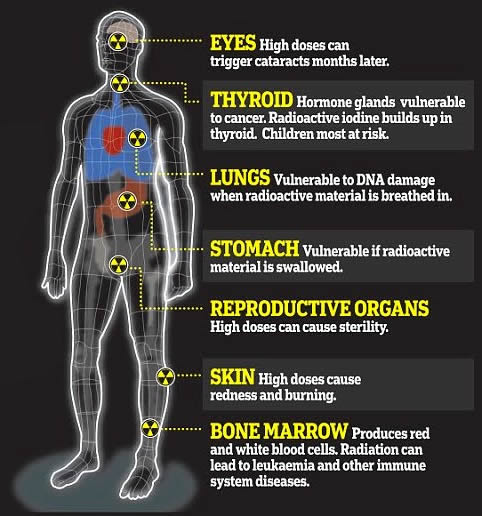
Exposure to radioactive materials, either while still in the plume, or after the fact as contamination, is the basis for potential health concerns. While alpha-emitting fallout material is not the external hazard that beta-, gamma- and x-ray-emitting materials can be, all of these materials are a potential internal hazard concern when the contamination spreads to sources of groundwater and surface water, livestock, crops, and other foodstuffs.

Fallout effects can be long lasting, contaminating an area for hundreds or even thousands of years. Fallout also enters the food chain. Cows eating contaminated grass produce contaminated milk, which can pose a widespread health risk.

As with anything to do with radiation, it is the amount of absorbed energy, or the radiation absorbed dose, that matters. Remaining indoors, with doors and windows shut and air conditioning systems turned off until the plume has passed, can reduce exposure to fallout.


Traveling out of the path of an incoming plume, if this can be predicted accurately, may also help avoid or reduce exposure to the fallout. Certain foodstuffs, especially water and milk, may have to be brought in from unaffected areas.

Time will be one of the best countermeasures should such an event occur. The “seven–ten” rule for nuclear detonations states that for every seven-fold increase in time after a weapon detonation, there will be a concomitant tenfold decrease in the amount of dose afforded by the fallout.

Pesticides

Pesticides
Pesticides

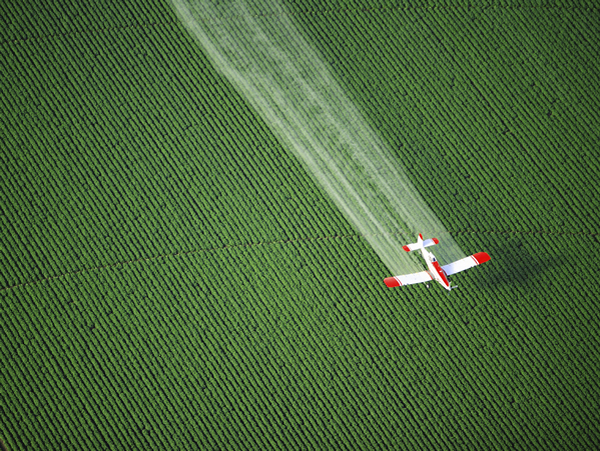
Pesticides are substances or a mixture of substances, of chemical or biological origin, used by human society to mitigate or repel pests such as bacteria, nematodes, insects, mites, mollusks, birds, rodents, and other organisms that affect food production or human health.

They usually act by disrupting some component of the pest’s life processes to kill or inactivate it. In a legal context, pesticides also include substances such as insect attractants, herbicides, plant defoliants, desiccants, and plant growth regulators.

History of Pesticides

The concept of pesticides is not new. Around 1000 B.C.E. Homer referred to the use of sulfur to fumigate homes and by 900 C.E. the Chinese were using arsenic to control garden pests. Although major pest outbreaks have occurred, such as potato blight (Phytopthora infestans), which destroyed most potato crops in Ireland during the mid-nineteenth century, not until later that century were pesticides such as arsenic, pyrethrum, lime sulfur, and mercuric chloride used.


Between this period and World War II, inorganic and biological substances, such as Paris green, lead arsenate, calcium arsenate, selenium compounds, lime–sulfur, pyrethrum, thiram, mercury, copper sulfate, derris, and nicotine were used, but the amounts and frequency of use were limited, and most pest control employed cultural methods such as rotations, tillage, and manipulation of sowing dates.

After World War II the use of pesticides mushroomed, and there are currently more than 1,600 pesticides available and about 4.4 million tons used annually, at a cost of more than $20 billion. The United States accounts for more than 25 percent of this market.

Older Insecticides

The first synthetic organochlorine insecticide, DDT (dichlorodiphenyl-trichloroethane), discovered in Switzerland in 1939, was very effective and used extensively to control head and body lice, human disease vectors and agricultural pests, in the decades leading up to the 1970s.

Benzene hexachloride (BHC) and chlordane were discovered during World War II and toxaphene (and heptachlor) slightly later. Shortly thereafter, two cyclodiene organochlorines, aldrin and dieldrin, were introduced, followed by endrin, endosulfan, and isobenzan.


All these insecticides acted by blocking an insect’s nervous system, causing malfunction, tremors, and death. All organochlorines are relatively insoluble, persist in soils and aquatic sediments, can bioconcentrate in the tissues of invertebrates and vertebrates from their food, move up trophic chains, and affect top predators.

These properties of persistence and bioaccumulation led eventually to the withdrawal of registration and use of organochlorine insectides, from 1973 to the late 1990s, in industrialized nations, although they continued to be used in developing countries.

Organophosphate insecticides originated from compounds developed as nerve gases by Germany during World War II. Thus, those developed as insecticides, such as tetraethyl pyrophosphate (TEPP) and parathion, had high mammalian toxicities. Scores of other organophosphates including demeton, methyl schradan, phorate, diazinon, disulfoton, dimethoate trichlorophon, and mevinphos have been registered.

In insects, as in mammals, they act by inhibiting the enzyme cholinesterase (ChE) that breaks down the neurotransmitter acetylcholine (ACh) at the nerve synapse, blocking impulses and causing hyperactivity and tetanic paralysis of the insect, then death. Some are systemic in plants and animals, but most are not persistent and do not bioaccumulate in animals or have significant environmental impacts.

Carbaryl, the first carbamate insecticide, acts on nervous transmissions in insects also through effects on cholinesterase by blocking acetylcholine receptors. Other carbamate insecticides include aldicarb, methiocarb, methomyl, carbofuran, bendiocarb, and oxamyl. In general, although they are broad-spectrum insecticides, of moderate toxicity and persistence, they rarely bioaccumulate or cause major environmental impacts.

Botanical insecticides include nicotine from tobacco, pyrethrum from chrysanthemums, derris from cabbage, rotenone from beans, sabadilla from lilies, ryania from the ryania shrub, limonene from citrus peel, and neem from the tropical neem tree. Most, other than nicotine, have low levels of toxicity in mammals and birds and create few adverse environmental effects.

Newer Insecticides

Synthetic pyrethroid insecticides, with structures based on the natural compound pyrethrum, were introduced in the 1960s and include tetramethrin, resmethrin, fenvalerate, permethrin, lambda-cyalothrin, and deltamethrin, all used extensively in agriculture.

They have very low mammalian toxicities and potent insecticidal action, are photostable with low volatilities and persistence. They are broad-spectrum insecticides and may kill some natural enemies of pests. They do not bioaccumulate and have few effects on mammals, but are very toxic to aquatic invertebrates and fish.

In recent years, new classes of insecticides have been marketed, none of which are persistent or bioaccumulate. They include juvenile hormone mimics, synthetic versions of insect juvenile hormones that act by preventing immature stages of the insects from molting into an adult, and avermectins, natural products produced by soil microorganisms, insecticidal at very low concentrations. Bacillus thuringiensis toxins are proteins produced by a bacterium that is pathogenic to insects.

When activated in the insect gut, they destroy the selective permeability of the gut wall. The first strains were toxic only to Lepidoptera, but strains toxic to flies and beetles have since been developed. B. thuringiensis has been incorporated into plants genetically.

Nematicides

Soil nematocides, such as dichlopropene, methyl isocyanate, chloropicrin, and methyl bromide, are broad-spectrum soil fumigants. Others, aldicarb, dazomet, and metham sodium, act mainly through contact. All have very high mammalian toxicities and can kill a wide range of organisms from both the plant and animal kingdoms. Although transient in soil, they may have drastic ecological effects on soil systems.


Molluscicides

Two molluscicides, metaldehyde and methiocarb, are used as baits against slugs and snails. Although of high mammalian toxicity, they cause few problems other than the occasional accidental death of wild mammals. Several molluscicides, used to control aquatic snails, N-trityl morpholine, copper sulfate, niclosamine, and sodium pentachlorophenate, are toxic to fish.

Herbicides

Hormone-type herbicides such as 2,4,5-T; 2,4-D; and MCPA; were discovered during the 1940s. They do not persist in soil, are selective in their toxicity to plants, are of low mammalian toxicity, cause few direct environmental problems, but are relatively soluble and reach waterways and groundwater.

Contact herbicides, which kill weeds through foliage applications, include dintrophenols, cyanophenols, pentachlorophenol, and paraquat. Most are nonpersistent, but triazines can persist in the soil for several years, are slightly toxic to soil organisms and moderately so to aquatic organisms. Herbicides cause few direct environmental problems other than their indirect effects, in leaving bare soil, which is free of plant cover and susceptible to erosion.

Fungicides

Many different types of fungicides are used, of widely differing chemical structures. Most have relatively low mammalian toxicities, and except for carbamates such as benomyl, a relatively narrow spectrum of toxicity to soil- inhabiting and aquatic organisms. Their greatest environmental impact is toxicity to soil microorganisms, but these effects are short term.

Effects on the Terrestrial Environment

Pesticides are biocides designed to be toxic to particular groups of organisms. They can have considerable adverse environmental effects, which may be extremely diverse: sometimes relatively obvious but often extremely subtle and complex. Some pesticides are highly specific and others broad spectrum; both types can affect terrestrial wildlife, soil, water systems, and humans.

Pesticides have had some of their most striking effects on birds, particularly those in the higher trophic levels of food chains, such as bald eagles, hawks, and owls. These birds are often rare, endangered, and susceptible to pesticide residues such as those occurring from the bioconcentration of organochlorine insecticides through terrestrial food chains.

Pesticides may kill grain- and plant-feeding birds, and the elimination of many rare species of ducks and geese has been reported. Populations of insect-eating birds such as partridges, grouse, and pheasants have decreased due to the loss of their insect food in agricultural fields through the use of insecticides.

Bees are extremely important in the pollination of crops and wild plants, and although pesticides are screened for toxicity to bees, and the use of pesticides toxic to bees is permitted only under stringent conditions, many bees are killed by pesticides, resulting in the considerably reduced yield of crops dependent on bee pollination.

The literature on pest control lists many examples of new pest species that have developed when their natural enemies are killed by pesticides. This has created a further dependence on pesticides not dissimilar to drug dependence. Finally, the effects of pesticides on the biodiversity of plants and animals in agricultural landscapes, whether caused directly or indirectly by pesticides, constitute a major adverse environmental impact of pesticides.

Effects on the Aquatic Environment

The movement of pesticides into surface and groundwater is well documented. Wildlife is affected, and human drinking water is sometimes contaminated beyond acceptable safety levels. Sediments dredged from U.S. waterways are often so heavily contaminated with persistent and other pesticide residues that it becomes problematic to safely dispose of them on land.

A major environmental impact has been the widespread mortality of fish and marine invertebrates due to the contamination of aquatic systems by pesticides. This has resulted from the agricultural contamination of waterways through fallout, drainage, or runoff erosion, and from the discharge of industrial effluents containing pesticides into waterways. Historically, most of the fish in Europe’s Rhine River were killed by the discharge of pesticides, and at one time fish populations in the Great Lakes became very low due to pesticide contamination.

Additionally, many of the organisms that provide food for fish are extremely susceptible to pesticides, so the indirect effects of pesticides on the fish food supply may have an even greater effect on fish populations. Some pesticides, such as pyrethroid insecticides, are extremely toxic to most aquatic organisms. It is evident that pesticides cause major losses in global fish production.

Effects on Humans

The most important aspect of pesticides is how they affect humans. There is increasing anxiety about the importance of small residues of pesticides, often suspected of being carcinogens or disrupting endocrine activities, in drinking water and food. In spite of stringent regulations by international and national regulatory agencies, reports of pesticide residues in human foods, both imported and home-produced, are numerous.

Over the last fifty years many human illnesses and deaths have occurred as a result of exposure to pesticides, with up to 20,000 deaths reported annually. Some of these are suicides, but most involve some form of accidental exposure to pesticides, particularly among farmers and spray operators in developing countries, who are careless in handling pesticides or wear insufficient protective clothing and equipment.

Moreover, there have been major accidents involving pesticides that have led to the death or illness of many thousands. One instance occurred in Bhopal, India, where more than 5,000 deaths resulted from exposure to accidental emissions of methyl isocyanate from a pesticide factory.