Showing posts with label animal. Show all posts

Addax

Addax
Addax

The addax is a large antelope whose coat is gray-brown in winter and almost white in summer. Black hair sprouts from its forehead and from the end of its 10- to 14-inch (25- to 36-centimeter) tail. Two long, thin, spiral horns (each twisting two or three times) extend up and back from the front of the animal’s head.

An average addax measures about 5 feet (1.5 meters) in length and about 3 feet (1 meter) in height at its shoulder. It weighs between 132 and 287 pounds (60 and 130 kilograms). A female addax usually gives birth to one infant after a gestation (pregnancy) period of eight to nine months.

The addax is at home in a desert environment. It receives all the water it needs from the plants it eats. With its long stride and splayed (spread apart) hooves, the animal easily crosses vast sandy areas in search of sparse desert vegetation. Addax usually travel at night in groups of 5 to 20.

Giant Armadillo

Giant Armadillo
Giant Armadillo

The giant armadillo is the largest member of the armadillo family, which is composed of twenty–one species. Eleven to thirteen moveable bony plates cover a giant armadillo’s back, and three to four flexible bands cover its neck.

Its body is dark brown, while its head, tail, and a stripe around the bottom of its shell are whitish. A giant armadillo measures 30 to 39 inches (76 to 99 centimeters) from the tip of its nose to the end of its body. Its tail is about 20 inches (50 centimeters) long. It weighs between 44 and 88 pounds (20 and 40 kilograms).

Unlike certain members of the armadillo family, the giant armadillo cannot roll into a ball, protected by its body armor. To escape from danger, the giant armadillo quickly digs itself into the ground using the long claws on its front legs. The animal also uses these claws to dig for ants, termites, worms, spiders, and other insects which it feeds on at night.

African Wild Ass

African Wild Ass
African Wild Ass

The African wild ass is one of only seven surviving species of equids (horse family). Of these seven species, five are threatened or endangered. The smallest member of the horse family, the African wild ass stands about 4.5 feet (1.5 meters) tall at the shoulders and weighs about 550 to 600 pounds (250 to 275 kilograms).

It has a gray coat with a white belly and a dark stripe up its back. With its long ears and short stubby mane, the African wild ass looks like its cousin, the American domestic donkey, and is in fact the donkey’s ancestor.

The African ass has strong teeth and sturdy narrow hooves. It eats the tough grasses and shrubs of the desert. Although its teeth wear down from grazing, they continue to grow throughout the life of the animal.

Aye-aye

Aye-aye
Aye-aye

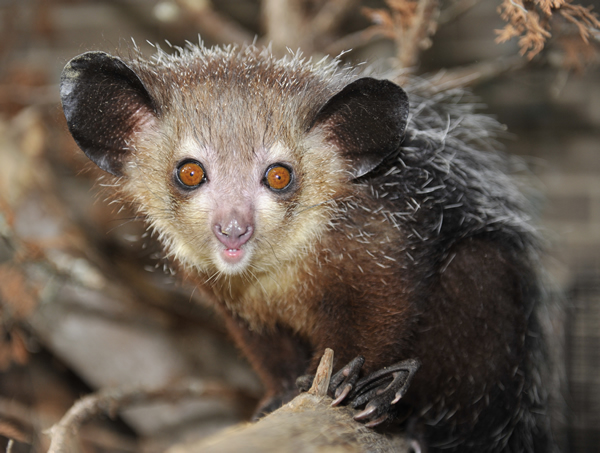
The unusual-looking aye-aye is covered with a coat of coarse blackish-brown hair, which overlays a denser coat of short white hair. The animal has very large, sensitive ears that stick out from its small, rounded head. It has sharp, rodent-like incisor (front) teeth and long, claw-like fingers and toes.

An average aye-aye is 15 to 18 inches (38 to 46 centimeters) long from the top of its head to the end of its body. Its bushy tail measures 16 to 22 inches (41 to 56 centimeters) long. The animal weighs between 4.4 and 6.6 pounds (2 and 3 kilograms).

While an aye–aye eats bamboo shoots, sugarcane, and some small animals, most of its diet consists of fruit (especially coconuts) and wood-boring insect larvae. Using its powerful incisors, the aye-aye breaks into coconuts, then scoops out the pulp with its very long, thin middle finger.

Golden Bandicoot

Golden Bandicoot
Golden Bandicoot

The golden bandicoot belongs to the order of mammals known as marsupials, whose young continue to develop after birth in a pouch on the outside of the mother’s body. The animal’s coarse fur is a mixture of yellow-orange and dark brown hairs, giving it a golden appearance.

It has a long, tapering snout and short, rounded ears. An average golden bandicoot measures 9 to 19 inches (23 to 48 centimeters) from the top of its head to the end of its body and weighs about 3 pounds (1.4 kilograms). Its tail is 3 to 8 inches (8 to 20 centimeters) long.

Golden bandicoot are nocturnal (active at night). During the day, they remain in their nests built on the ground, in a hollow, or in a rock pile. At night, the very quick, agile, and aggressive animals search for their diet of insects and worms.

Gray Bat

Gray Bat
Gray Bat

Contrary to its name, the gray bat is reddish-brown in color. Its forearm measures 1.6 inches (4 centimeters) long, and it weighs 0.35 ounce (10 grams). The gray bat differs from other species of the Myotis genus (a group with similar characteristics) in that its wing membrane (a double membrane of skin) attaches to its ankle instead of the side of its foot.

The gray bat feeds at night on insects, particularly mayflies and mosquitoes. It roosts in two different types of caves throughout the year.

Female gray bats begin hibernating immediately after mating in the fall; adult males and juveniles follow several weeks later. In late March, the females emerge from hibernation, while the rest emerge about a month later. Using sperm they have stored all winter, female gray bats fertilize their eggs after hibernation, giving birth to a single infant around late May.

Townsend’s Big-eared Bat

Townsend’s Big-eared Bat

The Townsend’s big-eared bat is named for its large ears, which are from 1 to 1.6 inches (2.5 to 4 centimeters) long. In contrast, the bat’s body length is 1.8 to 2.7 inches (4.5 to 7 centimeters), its tail length is 1.4 to 2.1 inches (3.5 to 5.3 centimeters), and its forearm length is 1.4 to 2 inches (3.5 to 5 centimeters). The average Townsend’s big-eared bat weighs between 0.18 and 0.46 ounce (5 and 13 grams).

Townsend’s big-eared bats feed primarily on moths, which they locate through echolocation (sonar). In this process, a bat emits high-pitched sounds that echo or bounce off its prey. The bat’s sensitive hearing picks up the echo. From that sound, the bat can determine the size, shape, and location of its prey.

Male and female Townsend’s big-eared bats come together in late fall or early winter to mate and hibernate. The females store the sperm until early spring, when they fertilize their eggs. After a gestation (pregnancy) period of 56 to 100 days, they give birth to a single infant, which they nurse until fall.

Grizzly Bear

Grizzly Bear

The grizzly bear, a subspecies of the brown bear (Ursus arctos), is one of the largest land mammals in North America. An average male grizzly has a head and body length of 6 to 8 feet (1.8 to 2.4 meters), stands 3.5 to 4 feet (1 to 1.2 meters) at its shoulder, and may weigh up to 800 pounds (360 kilograms).

The smaller female grizzly weighs between 200 and 400 pounds (90 and 180 kilograms). The grizzly bear is so-named because its thick, light brown to black fur is streaked with gray, giving it a “grizzled” look. Grizzly bears have short, rounded ears, humped shoulders, and long, curved claws.

Although grizzly bears are omnivores (they eat both plants and animals), most of their diet consists of vegetation: fruits, berries, nuts, and the bulbs and roots of plants. They also eat ants and other insects.

Sun Bear

Sun Bear
Sun Bear

The smallest member of the bear family, the sun bear has an average head and body length of 3.5 to 4.5 feet (1 to 1.4 meters). Its shoulder height is 26.6 inches (67.5 centimeters) and its weight is between 60 and 140 pounds (27 and 64 kilograms).

The animal’s short tail extends only 1 to 3 inches (3 to 7 centimeters). The fur on the sun bear’s body is very short and black; the fur on its muzzle is almost white. Most animals of this species have a white to yellow-orange horseshoe-shaped marking on their chests.

The sun bear’s curved and pointed claws make it an excellent climber. It spends most of its day sleeping or sunning on a platform it builds in trees 7 to 20 feet (2 to 6 meters) above the ground.

American Bison


The American bison (commonly known as the buffalo) has a massive body, humped shoulders, and pointed horns that curve up and in. In winter, its coat is dark brown and shaggy.

In the spring, this coat is shed and replaced by one that is short and light-brown. Hair on the head, neck, shoulders, and forelegs remains long and shaggy throughout the year. A beard also hangs from the chin of the animal’s huge, low-slung head.

An average American bison has a head and body length of 7 to 12.5 feet (2.1 to 3.8 meters) and a shoulder height of 5 to 6.5 feet (1.5 to 2 meters). It weighs between 700 and 2,200 pounds (320 and 1,000 kilograms). The animal’s relatively short tail is 12 to 35 inches (31 to 89 centimeters) long and ends in a tuft of hair.

European Bison

European Bison
European Bison

European bison (often called wisent, from the German word for “bison”) are the largest land mammals in Europe but are slightly smaller than their close relative, the American bison.

The adult male European bison weighs in the range of 800 to 2,000 pounds (400 to 920 kilograms); the female weighs from 650 to 1,200 pounds (300 to 540 kilograms). A good-sized male has a shoulder height of about 6 to 6.5 feet (1.8 to 2 meters) and his body is about 9 feet (2.75 meters) long. The head is very big, and both males and females have horns.

European bison are varying shades of brown, and they have long hair growing from their necks and foreheads and a short beard on their chins. They have a shoulder hump and carry their heads high. In winter, they grow an extra coat of fur to protect themselves from the cold.

Wild Water Buffalo

Wild Water Buffalo
Wild Water Buffalo

The wild water buffalo, also known as the Asian or Indian buffalo, is a very large animal, averaging 7.75 to 10 feet (2.4 to 3 meters) long. It stands 5 to 6.25 feet (1.5 to 2 meters) tall at its shoulder and weighs between 1,550 and 2,650 pounds (700 and 1,200 kilograms). Long, coarse hair covers the buffalo’s ash gray to black body.

Both male and female water buffalo have small ears, thin faces, and widely spread horns. The horns, thick where they emerge from the animal’s head, form a semicircle by curving out and back. Ending in a point, these horns may reach a length of 6 feet (2 meters).

The wild water buffalo’s diet consists of grasses and other vegetation that grows along the shores of lakes and rivers. Although the animal is fast and aggressive, it can fall prey to tigers.

Bactrian Camel

Bactrian Camel
Bactrian Camel

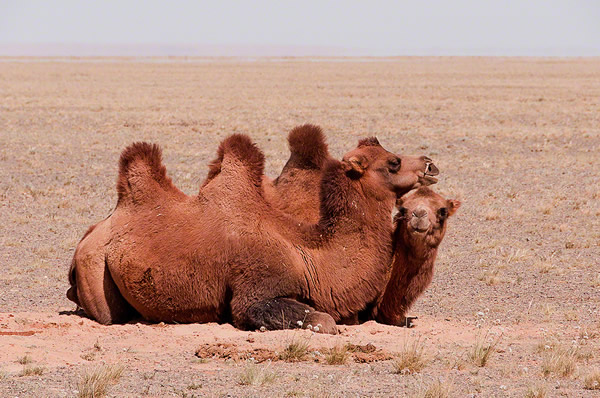
The bactrian camel and the better–known Arabian camel (Camelus dromedarius) are the only two living species of true camel. Whereas the Arabian camel has only one hump, the bactrian camel has two.

An average bactrian camel stands 6 to 7.5 feet (1.8 to 2.3 meters) in height and weighs between 1,000 and 1,575 pounds (455 and 715 kilograms). The coat of a wild bactrian camel is short and gray-brown in color; that of a domestic or tame version of the animal is long and dark brown.

The bactrian camel is well adapted to its desert habitat. Its special eyelids help wipe sand from the surface of the animal’s eye. Its nostrils close to slits to keep out blowing sand. Its broad, thick-soled feet allow it to move steadily and quickly over shifting sand, achieving speeds up to 40 miles per hour (64 kilometers per hour).

Cheetah

Cheetah
Cheetah

“Cheetah” comes from the Hindu word chita, meaning “spotted one.” Round black spots cover the cheetah’s tawny fur and a black streak runs down each cheek. An average cheetah measures 4.5 to 5 feet (1.4 to 1.5 meters) long and stands between 27 and 34 inches (69 and 86 centimeters) high at its shoulder. Its tail extends 24 to 32 inches (61 to 81 centimeters). It weighs between 80 and 145 pounds (36 and 66 kilograms).

Cheetahs are the world’s fastest land animal. They are capable of bursts of speed up to 70 miles per hour (110 kilometers per hour), but they usually cannot keep up this top speed for more than 1500 feet (455 meters).

Unlike other cats, a cheetah cannot retract its claws. This physical feature allows the animal to dig into the ground as it runs, giving it speed. Whereas leopards and tigers ambush their prey, cheetahs chase their prey down.

Chimpanzee

Chimpanzee
Chimpanzee

Chimpanzees, gorillas, and orangutans are all considered great apes. Of the three, chimpanzees are the most closely related to humans. Chimpanzees and humans share 98 percent of the same genetic makeup.

In addition, the two groups share many social and psychological traits. Researchers have documented chimpanzees making and using tools, expressing complex emotions, forming bonds and friendships, and communicating using sign language.

An average chimpanzee stands 5 feet (1.5 meters) tall and weighs about 150 pounds (68 kilograms). Since its arms are longer than its legs, a chimpanzee walks on the ground using the soles of its feet and the knuckles of its hands.

Short-tailed Chinchilla

Short-tailed Chinchilla

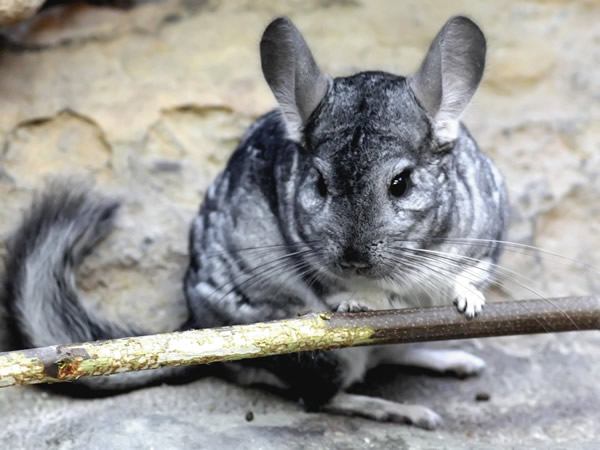
The short-tailed chinchilla is a nocturnal (active at night) rodent with soft fur, large ears, and a bushy tail. It is one of two species of chinchilla—the other is the long-tailed chinchilla (Chinchilla langiera).

An average chinchilla has a head and body length between 9 and 15 inches (23 and 38 centimeters) and a tail length between 3 and 6 inches (7.5 and 15 centimeters).

Female chinchillas weigh up to 28 ounces (794 grams), while the smaller males weigh up to 18 ounces (510 grams). A chinchilla’s silky fur is mostly gray in color. The animal’s hind legs are much larger than its front legs, making it an agile jumper.

Malabar Large Spotted Civet

Malabar Large Spotted Civet

The Malabar large spotted civet is nearly identical to, or is in fact the same species as, the large spotted civet (Viverra megaspila). Adults of this species usually weigh about 18 to 20 pounds (8 to 9 kilograms).

Their long gray coats are mottled with large black spots. They have long tails banded in black and a black crest of long fur down their backs. Although most civets look like cats, the Malabar large spotted civet more closely resembles a dog with its long legs and dog-like head.

Malabar civets stay hidden in the thickets during the day and forage for food at night. They have never been seen in trees, and probably obtain their food on the ground. They are thought to eat eggs, small mammals, and some vegetation.

Musk Deer

Musk Deer
Musk Deer

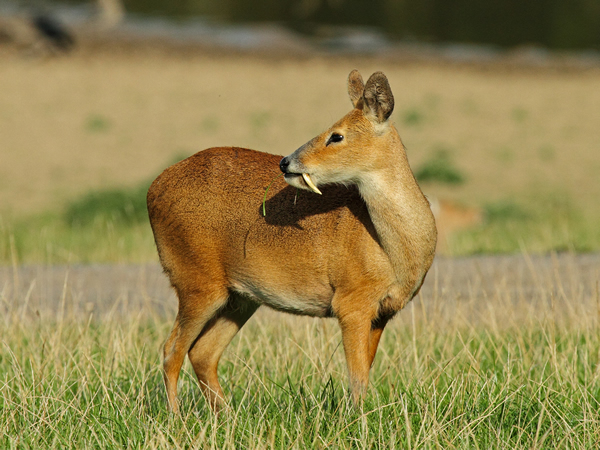
Musk deer are so-named because the males of the species have a gland, called the pod, that develops in the skin of their abdomen. This gland produces a waxy substance called musk, which may be used by males to attract females.

An average musk deer has a head and body length of 28 to 39 inches (71 to 99 centimeters), stands 20 to 24 inches (51 to 91 centimeters) at its shoulder, and weighs between 15 and 40 pounds (7 and 18 kilograms). The musk deer’s hair is long and coarse. It varies in color from dark to golden brown, depending on the species.

The hind legs of a musk deer are almost one-third larger than its front legs. This helps to make the animal a quick and agile jumper. Unlike most other deer, musk deer have no antlers.

Swamp Deer

Swamp Deer
Swamp Deer

The swamp deer is a large member of the deer family. The animal has an average head and body length of 4 to 6 feet (1.2 to 1.8 meters), measures about 4 feet (1.2 meters) in height at its shoulder, and weighs between 375 and 620 pounds (170 and 280 kilograms).

In winter, the swamp deer’s coat is brown on the top part of its body and paler on its underside. In summer, the entire coat lightens in color. Male swamp deer are often darker overall than females. Swamp deer feed on grasses and aquatic plants, and their main predators are tigers and leopards.

In central India, swamp deer are known as barasingha, which means six-pointer. However, their 36- to 40-inch (91- to 102-centimeter) antlers can have 10 or more points. Antlers are solid, bony outgrowths of a deer’s skull. The stem of an antler is called the beam, while the branches are called the tines. Most male deer grow and shed antlers annually.

African Wild Dog

African Wild Dog
African Wild Dog

The African wild dog, also called the African painted wolf, has a streaked, multicolored coat. The tan, black, and white pattern varies between individual dogs, but each animal’s head is usually dark. An African wild dog has large rounded ears, which it uses to signal other dogs and to control body temperature by radiating (giving off) heat. Its 12- to 16-inch (30- to 41-centimeter) tail ends in a plume that is white-tipped.

The dog’s legs are long and thin. An average African wild dog has a head and body length of 30 to 44 inches (76 to 112 centimeters) and a shoulder height of 24 to 31 inches (61 to 79 centimeters). It weighs between 37 and 79 pounds (17 and 36 kilograms).

African wild dogs have a tightly knit social structure. They form packs of 2 to 45 members that hunt cooperatively. Prey includes impalas, antelopes, gazelles, zebras, wildebeest, and warthogs.